
Partner Tomi Ere on Entrepreneurship with Fatherhood at the Core
26.2.2026
August turns 25 this year. We could tell the firm’s history through timelines and achievements, but the real story lives in the people who have shaped it. Tomi Ere has been one of them since 2007. Nearly two decades at one firm leave a trail shaped by entrepreneurship, fatherhood and a conscious effort to balance both.
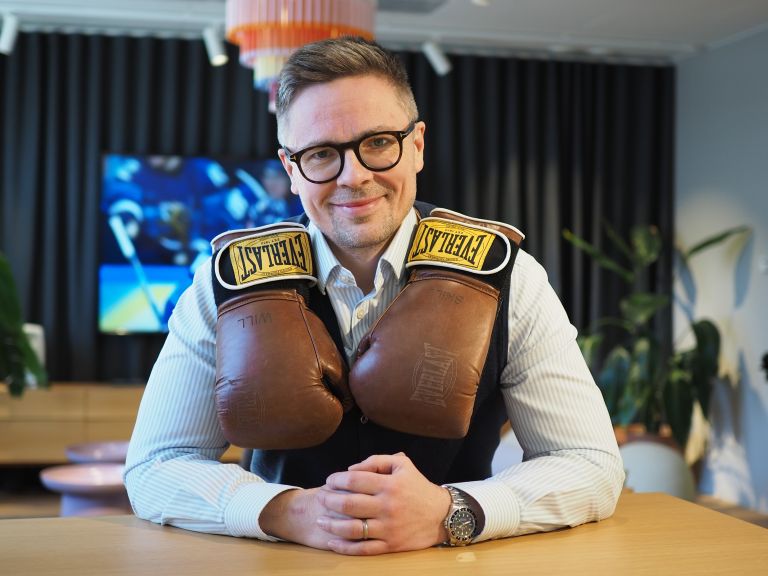
Tomi Ere in February 2026 at August’s office, wearing the Skill x Will boxing gloves gifted by August for his 50th birthday.
We start the interview with a couple of photographs.
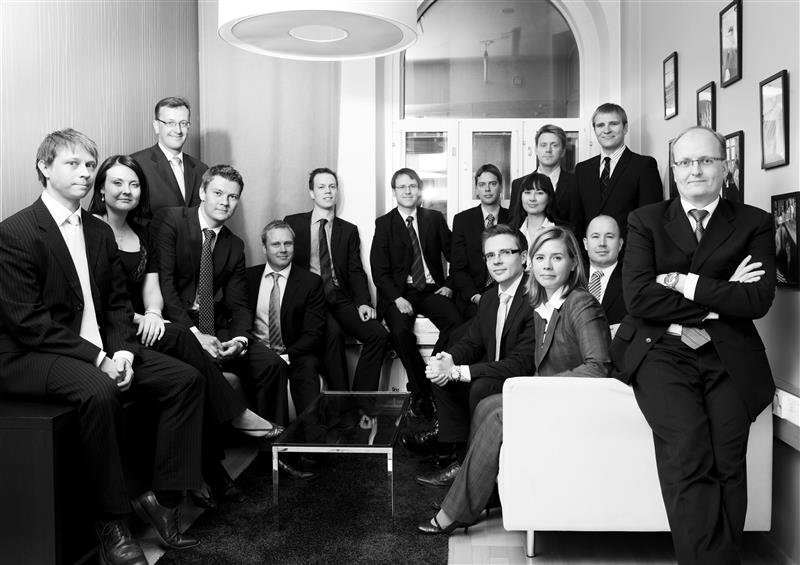
The first one shows a slightly different August than what the firm is today. A black-and-white group portrait from the Bulevardi office: sharply dressed consultants, composed and confident. It was August’s challenger era, when the firm positioned itself as a brave alternative to the international giants, especially the MBB firms.
“Being the challenger is, in a way, easier,” he says. “Staying the champion, like in sports, that’s harder. When you’re the champion or the leading local player, keeping that position, or even figuring out what the next step is, can be more difficult.”
Today the firm is exactly where it wanted to be in the Finnish market – established, trusted, and stable in its identity. Yet you can hear that the challenger mindset still appeals to Tomi: “Professionally, I see myself as an entrepreneur. The sport I happen to play is management consulting.”
Tomi joined August in 2007 from Booz Allen. What has kept him in consulting is not familiarity, but the opportunity to build and grow something over time. The consulting projects still energize him, but the perspective has shifted. “When I was younger, it was more about my own development and the next project. Now it’s about the community. Are we building a great place to work? Are we developing this firm in the right direction?”
He speaks about August’s people with particular pride. Talented professionals who choose to join and most importantly, to stay. “It’s an extraordinary feeling that people like this want to work here and stay here longer than the industry average. That gives me energy. And humility.”
When asked what has remained constant throughout his career, he outlines that it is the genuine desire to help the client, whatever their situation is. “I don’t get excited about reports anymore. I get excited about understanding the real issue and helping leadership teams move things forward so that actual change happens.” For him, the ultimate metric of a successful project is simple. If the client calls again when the next need comes, he knows it’s a job well done.
What clients value in August’s way of working, he believes, is the ability to engage with people at all levels, from the chair of the board to front-line employees. Tomi says it’s part of the August identity: “We are down to earth, approachable, and sincerely enjoy working together and collaborating with our clients. We dare to challenge, but we’re not know-it-alls who arrive to declare what is best.”
If there is one thing he believes Finnish companies and consultants should do more right now, it’s pursuing growth. “Finland will hit a wall without growth. We need to be brave enough to take Finnish expertise beyond the domestic market. That’s something I would call for, from our clients and from ourselves.”
“The formula for performance = Skill x Will”
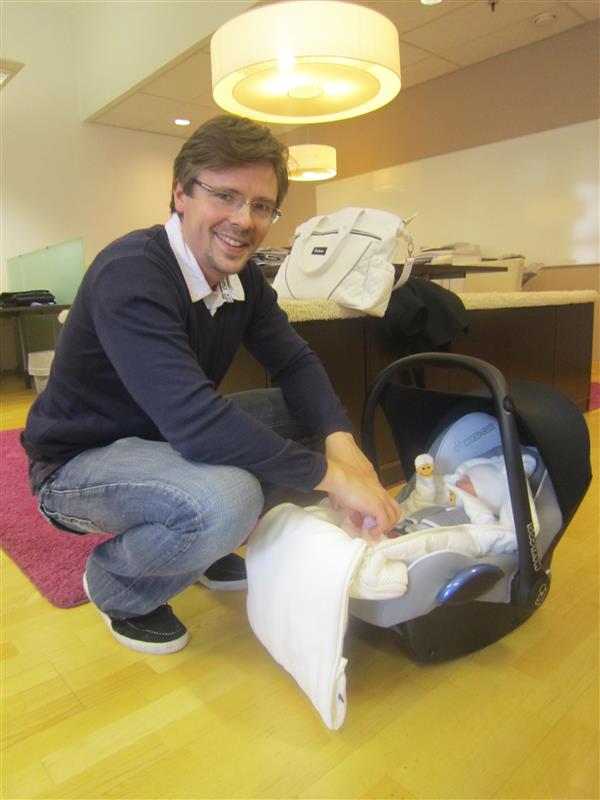
The second image is from August’s Aleksanterinkatu office. Tomi is in his thirties, crouching next to a baby carrier, smiling. The photo captures what has remained constant. “If everything is taken away,” he says, “I’m a dad. Everything else is built around that. That’s the core of the core.”
Tomi says the clarity came after reading Aki Hintsa’s The Anatomy of Winning, which asks who you are beyond your role. “I’m very fond of children. My own kids are an amazing part of my life. And if I had the chance to do pro bono work, it would be to support children in difficult situations.”
Another glimpse beyond the entrepreneurial role comes as Tomi removes his Teams background, and we are suddenly not in an office but in his home gym. A framed pencil drawing hangs on the wall: sixteen-year-old Tomi’s portrait of Mike Tyson. “Hardly anyone knows this about me. I was genuinely good at drawing. I used to draw a lot. Mostly athletes, especially boxers. This was the best one.” He rediscovered the drawing after his mother passed; she had kept it. Today it hangs where he trains.
Boxing has been a special interest since youth. He never competed but trained seriously. “I didn’t really see myself going to lectures with a black eye,” he says, smiling.
Sport is now less about intensity and more about staying fit. He believes physical condition directly affects his performance at work. For years, he had the idea of building a gym at home. Eventually, he did. It has also meant accepting the occasional injury, including a torn wrist tendon from heavy bag training that required surgery. In his twenties, he once sparred with Tarmo “Tare” Uusivirta, one of Finland’s most accomplished professional boxers. Confident in his fast hands, he landed a couple of clean shots. The pro’s response was immediate, and the session ended with Tomi’s nose bleeding.
He tells the story without bravado. For him, it’s a lesson in the difference between enthusiasm and mastery. That lesson surfaces in a phrase he repeats, almost to exhaustion, to clients and to his team: “The formula for performance is Skill x Will.”
Neither competence nor commitment alone is enough. You need both. When Tomi turned 50, August gave him a pair of boxing gloves. One reads Skill and the other, Will.
“There are no bad teams, only bad leaders”
A couple of years ago, he attended Harvard Executive Education, a program on leading professional service firms. The intensity of the experience and the relationships formed there, stayed with him. For five years, Tomi acted as August’s Managing Partner. At Harvard, he says, they were taught that nothing is as difficult as leading a professional services firm partnership: highly capable people with strong opinions are not easily led in a traditional sense. The same applies at August, where the Managing Partner does not lead from the top down; the partnership makes decisions together. Classical leadership rules do not quite work. The task is to align different strengths and perspectives, so the firm plays as one team.
When it comes to leading project teams in uncertain situations, stability matters: “You need a clear keel. When waves come, you don’t immediately swing from side to side. You stay calm, maybe adjust, but you hold direction.”
In Tomi’s view, there are no bad teams, only bad leaders. “If performance drops or challenges arise, I look in the mirror first. I may not have given clear enough direction or created the right conditions for success. It’s not about blaming others; it’s about taking responsibility and asking whether I could have led more clearly. That’s a principle I try to follow.”
Looking ahead, what does he hope August will be known for five years from now?
“Trust,” he answers. “When a client chooses us, they can trust that we will do everything we can. We don’t just execute projects. And internally, if you’re part of this community, you can trust that we take care of each other.”
The firm is strongly values-driven, something Tomi feels proud of. He believes August has been brave to take care of its team in good times and in bad, directly in line with its values. But perhaps, he adds, the bravest things are yet to come.
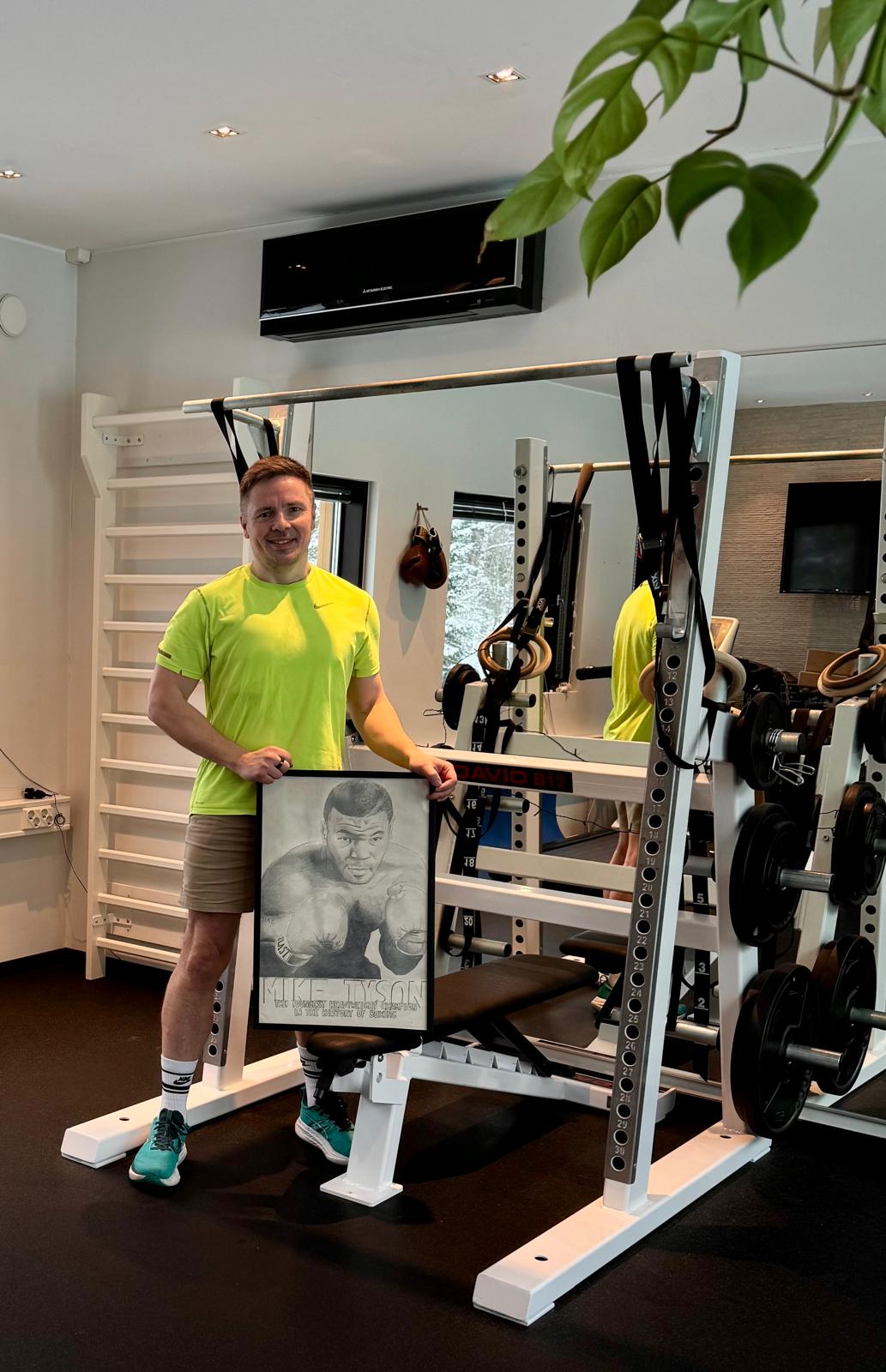
At his home gym, holding the framed drawing of Mike Tyson, one of Tomi’s idols.
Name: Tomi Ere
Born: 12 December 1974, Jyväskylä. Fun fact: he was delivered in hospital room number 12.
Family: Wife and three children: a self-described triple dad
Education: Master’s degree from Helsinki University of Technology, now Aalto University
Off the clock: CrossFit-style training in his home gym (the interview morning began with half a Murph) and treadmill runs. Despite his early talent for drawing, he no longer sketches and admits his artistic ability is narrow, limited to drawing rather than music. He jokes that he feels sorry for his children after years of off-key lullabies, a habit his eight-year-old still appreciates, just not when friends are around.